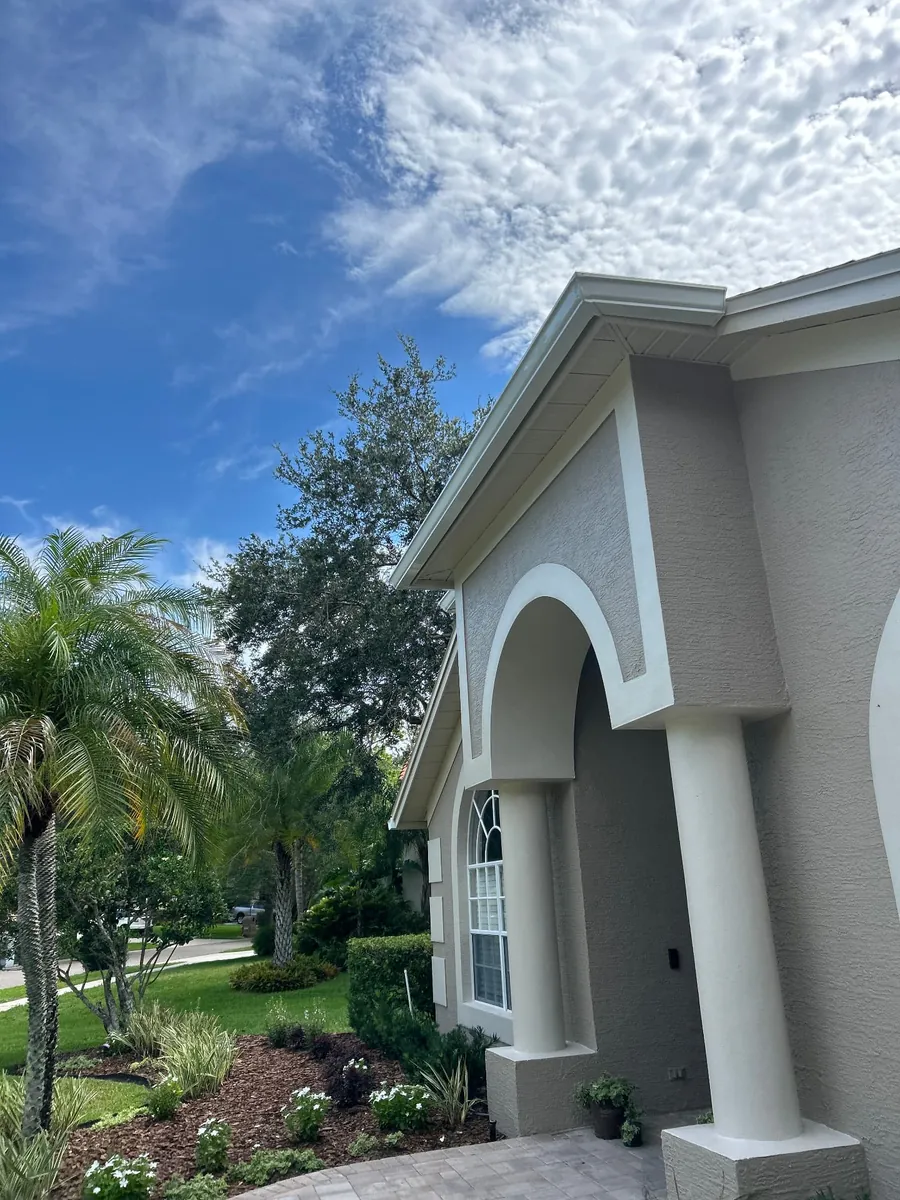
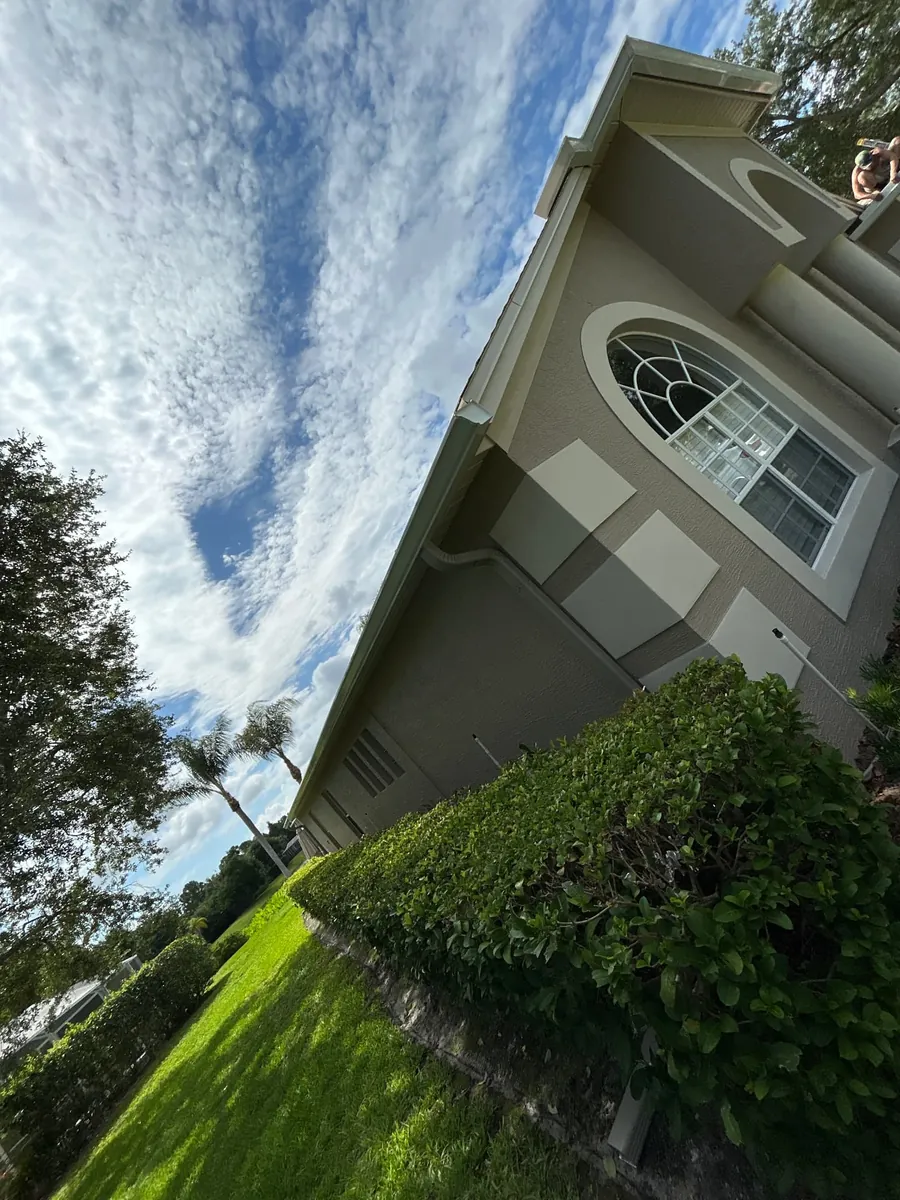
Roof area sets the volume. A gutter does not carry rainfall; it carries whatever the roof surface above it delivers. Two homes on the same street can need different systems because one has three planes draining into a single short run over the entry and the other spreads the same roof area across four elevations.
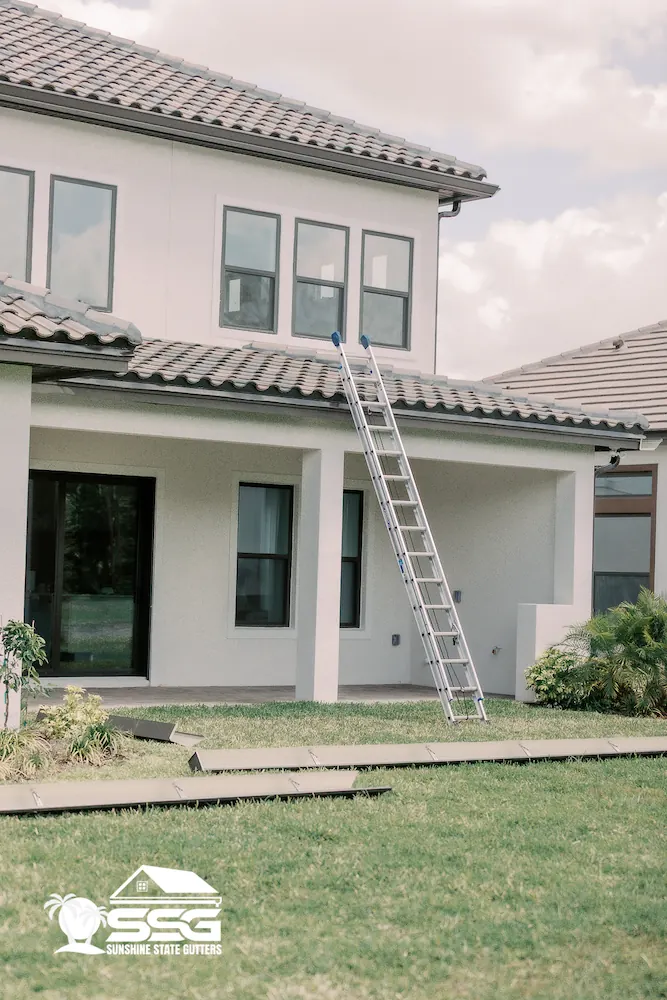
Pitch and roof surface change the timing. Steep pitches move water to the edge quickly and throw it further out, so gutter position matters as much as size. Barrel and flat tile channel runoff into fast, concentrated streams — which is why 7-inch seamless gutters are the recommended option on tile and metal roofs and on steep-pitched shingle, while 6-inch seamless is generally what we install on typical shingle roofs.
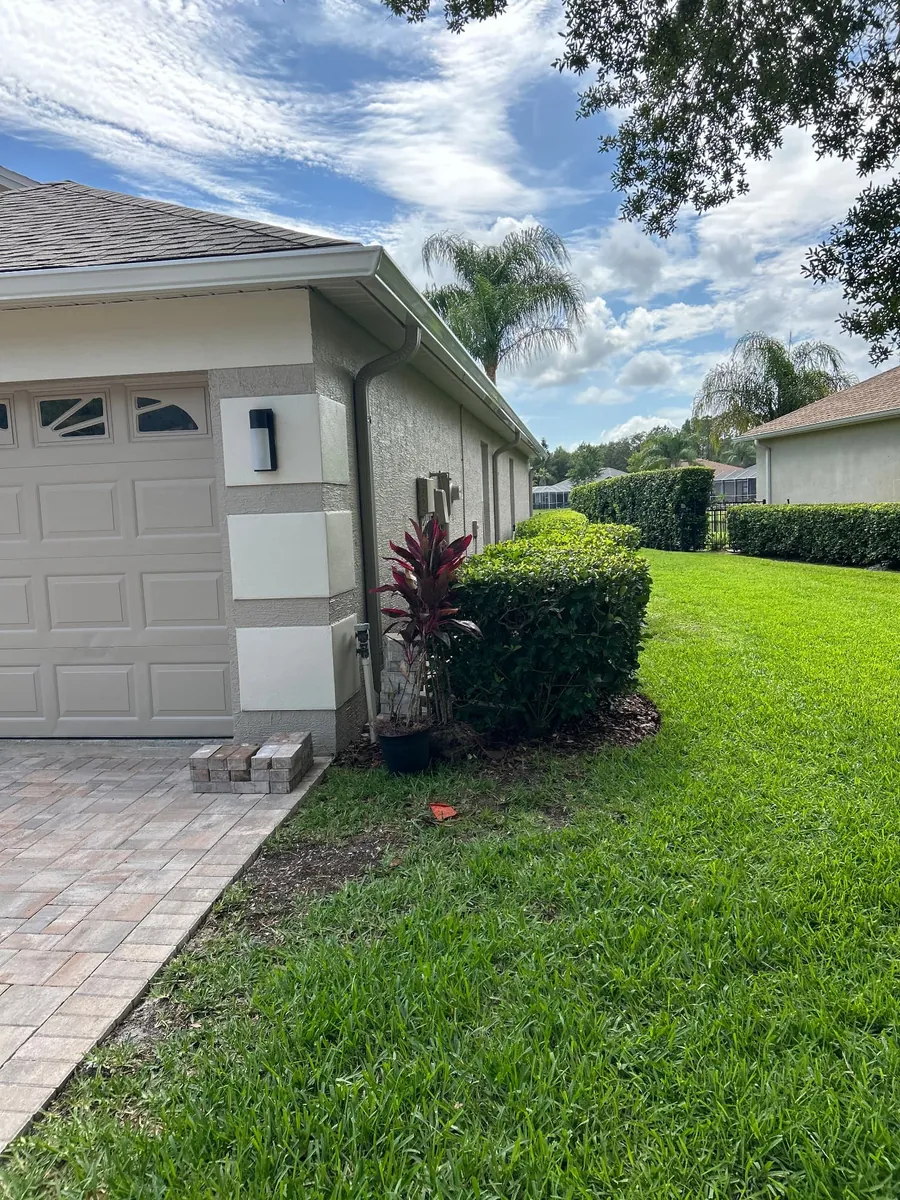
Downspouts decide whether capacity is real. A larger gutter paired with too few or undersized outlets simply fills and spills at the same place it always did. Outlet count and position follow the volume each run receives and where the discharge can be released.
Pitch inside the gutter matters too. The run has to fall consistently toward its outlet. A flat or reverse-pitched section holds water, adds weight to the fascia it hangs from, and overflows before the downspout ever sees the volume.
Then the water has to go somewhere. Discharge landing beside the slab soaks the soil the house sits on. Downspout extensions move it out to ground that falls away; where a yard already holds surface water on its own, a French drain is the right tool instead.